

12 Things Brits Do When Someone Sits Too Close to Them That Americans Might Find Hilarious

Imagine you’re sitting on a bus in the UK, enjoying your personal space, when suddenly someone decides to plop down right next to you—even though there are plenty of other seats open! What do you do? If you’re like many Brits, you’ve got a whole routine, subtle yet effective, that might just leave Americans scratching their heads or even laughing. Let’s dive into these quiet quirks, shall we?
1. Move a few centimetres away without making it obvious

Sitting on public transport and feeling someone invade your personal bubble? The British are masters at the subtle slide. Without causing a scene, many will quietly shift a few centimetres away from their new neighbor. It’s an art form really—moving just enough to regain some space but not so much that it becomes a public spectacle. This dance of discomfort is so slight, it often goes unnoticed, except by the keenest observers.
2. Suddenly become extremely interested in their phone

Nothing exists quite like the sudden fascination with one’s phone that comes over a Brit when someone sits too close. Emails, old texts, or an intense scroll through social media—anything goes if it means avoiding eye contact. It’s a digital escape hatch that seems to say, “I’m far too busy in my virtual world to notice how close you are in the real one.”
3. Lean towards the opposite side

When shifting subtly doesn’t quite cut it, the next level of personal space protection kicks in: the lean. Leaning towards the window or the aisle, whichever offers the most space, is a common British tactic. It’s almost as if there’s an invisible force field on one side that they’re desperately trying to maintain. This maneuver is both a physical and psychological attempt to restore some semblance of boundary.
4. Keep their arms firmly tucked in

Ever watched Brits on a crowded train or bus? You might notice that many keep their arms very close to their bodies, elbows practically glued to their sides. It’s a defensive posture, minimizing contact and protecting one’s personal space like a tortoise in its shell. This tactic is especially useful in guarding against the dreaded arm-overlap that can occur in tight spaces.
5. Stare straight ahead

Avoiding eye contact and pretending nothing awkward is happening requires a fixed gaze, preferably straight ahead. This face-forward approach helps maintain an air of ‘I am in my own world,’ and signals to the intruder that you’re not available for chit-chat or, indeed, any form of interaction. It’s the facial equivalent of ‘nothing to see here.’
6. Refuse to acknowledge the invasion of personal space

The art of ignoring is finely honed in British culture, particularly when someone violates your personal space. By completely disregarding the close sitter, the individual maintains a stoic British demeanor. It’s as if by not acknowledging the issue, the problem doesn’t exist. This non-reactive approach is both baffling and amusing to outsiders, especially Americans who might opt for a more confrontational reaction.
7. Move their bag onto their lap
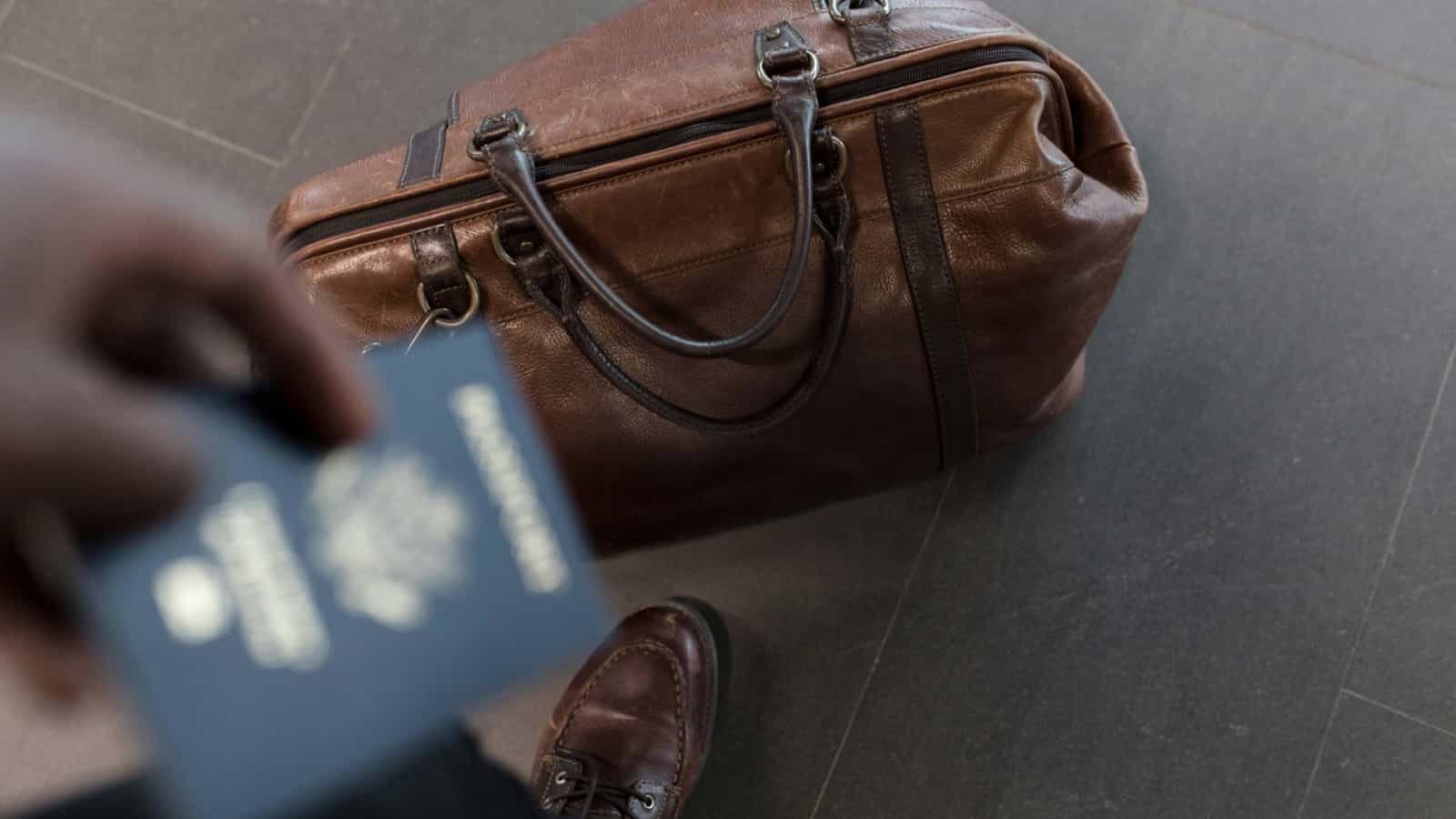
A bag isn’t just for carrying your things; in the UK, it’s a strategic barrier against unwanted closeness. Moving a handbag or backpack onto one’s lap after someone sits too close serves dual purposes: it acts as a physical shield and sends a clear message of ‘this is my space.’ It’s a polite yet firm declaration of personal territory.
8. Look around to confirm there were definitely other empty seats available

This action combines bafflement with a hint of irritation. The glance around the compartment to confirm that yes, indeed, there were other seats the person could have chosen, is a silent protest. It’s a way of questioning the sitter’s decision-making without uttering a single word, relying instead on body language to express disbelief and slight annoyance.
9. Make brief eye contact with somebody else as if asking “Are you seeing this?”

When under siege by a space invader, seeking solidarity through eye contact with another passenger can be reassuring. That brief, shared glance with a stranger can say so much—”Can you believe this?” It’s a moment of silent camaraderie, a mutual understanding of the unspoken trial of traveling too close together.
10. Get up at the next opportunity and pretend they needed to move anyway

Finally, the ultimate escape—seizing the next chance to get up, whether it’s your stop or not. The key here is the casual nature of the exit, as if the decision to move was completely unrelated to the close sitter. It’s a smooth, often practiced maneuver that signals, “It’s not you, it’s me… but really, it’s you.”
11. Complain about it afterwards rather than saying anything at the time

Once safe in the company of friends or family, the recounting of the ordeal begins. The storytelling is often more animated and detailed, a stark contrast to the silent suffering that occurred at the moment. This post-event complaining is both a stress reliever and a way to bond over shared experiences of similar space invasions.
12. Remember the incident for considerably longer than necessary

The close sitting incident might be over, but it won’t be forgotten any time soon. Brits tend to hold onto these memories, bringing them up in future conversations as classic examples of personal space violations. It’s almost as if the story gets better with time, each retelling adding a layer of humor and disbelief at the audacity of some people.

We are Mary and Eric, the founders of Be Right Back, a blog dedicated to romance around the globe and at home.
We are Mary and Eric, the founders of Be Right Back, a blog dedicated to romance around the globe and at home. With over 10 years of experience in dating and traveling to romantic places, we share our favorite date ideas and romantic destinations to help couples level up their relationships. Having lived in and traveled through the USA, we also share our favourite things to do in the States.
With 70,000 monthly readers and 16,000 followers on social media, Be Right Back is your go-to resource for romantic trip ideas and couple activities at home and abroad.